
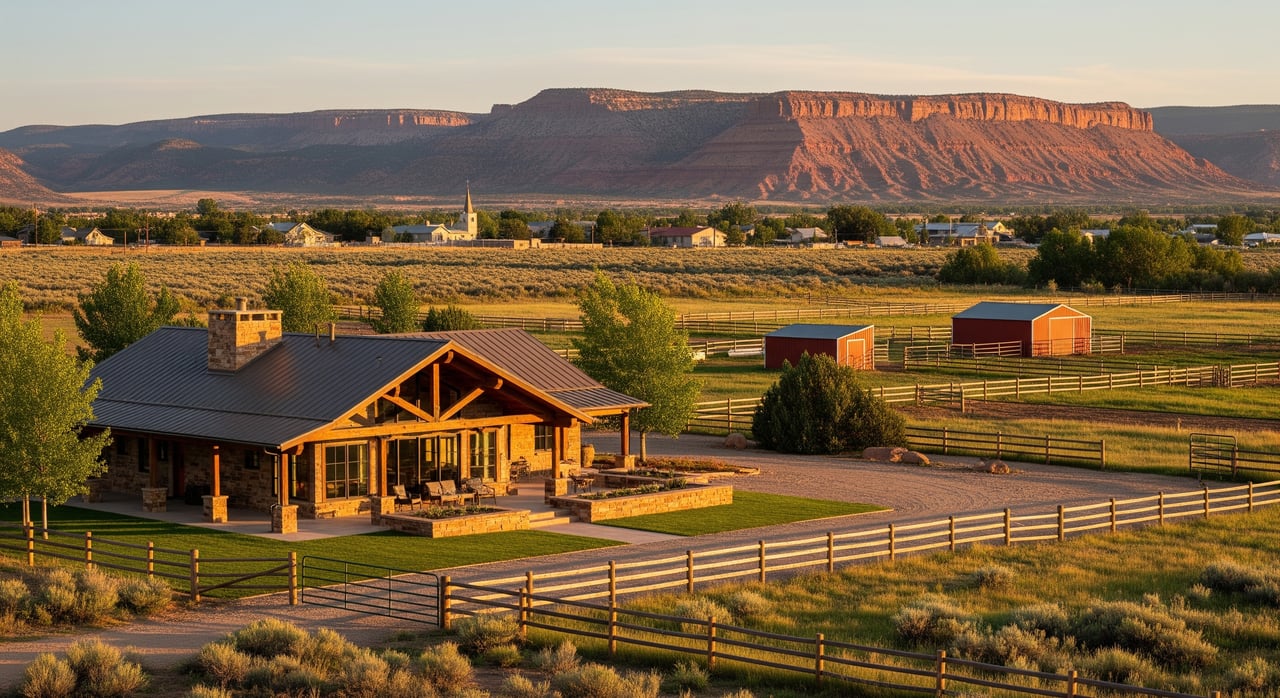
Trying to choose between open acreage outside Mancos and a low‑maintenance home in town? You are not alone. Each property type in Mancos offers a distinct lifestyle, utility setup, and day‑to‑day rhythm. In this guide, you will learn what to expect from ranch and acreage parcels, how in‑town homes compare, and the key due diligence steps that help you buy with confidence. Let’s dive in.
Property types at a glance
- Ranch and acreage: Space, privacy, and potential for animals or hobby agriculture. You handle more infrastructure and maintenance.
- In‑town homes: Proximity to services, municipal utilities, and simpler upkeep. Lot sizes are smaller and town codes apply.
- Mixed use exists in Mancos too, but this guide focuses on ranch/acreage and in‑town homes, since most buyers start with those choices.
Ranch and acreage: What to expect
Ranch and acreage parcels around Mancos range from a few acres to large tracts. You will see pastures, fencing, ponds, seasonal creeks, and outbuildings like barns or sheds. Some parcels border public lands. If you want privacy and room for animals or equipment, this is where you will likely look.
Land, water, and rights
Water is central on rural property. Domestic water often comes from a private well or spring. Irrigation may rely on ditch shares or surface water. In Colorado, well permits and water rights are separate topics. Confirm the well permit, review any available well logs, and verify any claimed irrigation or surface water rights with the proper agencies and ditch companies. Test water quality for hardness, bacteria, and minerals so you understand treatment needs and seasonal variation.
If a seller mentions water shares, ask for documentation and contact the relevant ditch company to confirm ownership and priority. If you plan to expand agricultural use, clarify whether water availability aligns with those plans.
Utilities and services
- Sewer: Rural parcels typically use on‑site wastewater systems. Have the septic inspected, check permit records with county environmental health, and confirm system capacity for your intended use.
- Power: Many areas are served by an electric cooperative. If a line extension is needed, get a written estimate for cost and timing.
- Gas and heat: Natural gas lines may be limited. Many rural homes use propane. Ask about tank ownership or lease terms.
- Internet: Options vary. You may find fixed wireless, DSL in certain corridors, satellite, or cellular hotspots. Always test signal and speeds at the property.
- Backup: Solar with batteries or a generator is common for resilience during outages or for remote locations.
Access, roads, and winter
Access can be a deal‑maker. Many rural parcels sit on gravel or dirt county roads, while others rely on private roads and long driveways. In winter, county plows public roads, but not private roads. If your driveway is long or steep, budget for snow removal. Verify recorded legal access and any road maintenance agreements so you know who pays for grading, plowing, and repairs.
Zoning, covenants, and taxes
Outside town limits, Montezuma County zoning applies. Confirm permitted uses if you plan to add a guest house, convert a barn, or run a home‑based business. Some rural subdivisions have covenants that set minimum building sizes or limit livestock. Others have no HOA but may still have recorded deed restrictions. Ask for CC&Rs, any HOA rules, fees, and recent meeting notes. If the land carries an agricultural tax classification, understand the ongoing requirements to maintain it. Conservation easements can limit future development, so review all recorded documents.
Daily life and maintenance
With acreage comes more responsibility. Expect ongoing fence repair, pasture and weed management, snow removal, septic maintenance, and periodic well system service. If that sounds enjoyable and part of your vision, acreage can be a great fit.
In‑town Mancos homes: A simpler setup
Homes within the Town of Mancos boundaries offer smaller lots and easier access to services. Daily life tends to be simpler with fewer on‑site systems to manage.
Services and utilities
In many neighborhoods, you will find municipal water and sewer, plus trash service. You pay utility bills instead of maintaining a well and septic. Internet and cell service options tend to be better in town, though availability varies block by block. If a property is near the edge of service areas, confirm tap availability and expected speeds before you go under contract.
Permits and town codes
Town zoning and building permits apply. If you plan to remodel, add an accessory structure, or change use, check the Town of Mancos planning and utilities departments for requirements and tap fees. Some in‑town subdivisions have HOAs, while others do not. Review any covenants for design rules or fencing standards so there are no surprises.
Winter and everyday access
Town streets are generally easier to navigate year‑round. Driveways are shorter, and snow shoveling is simpler. If you want lower maintenance and quick access to shops and services, in‑town living is often the better match.
Which lifestyle fits you best?
- Choose ranch/acreage if you want space, privacy, room for animals, and are ready to handle wells, septic, and road upkeep.
- Choose in‑town if you prefer convenience, municipal utilities, smaller yards, and simpler winter routines.
- If you balance a small business with living space, you can explore mixed‑use options, which require careful zoning and licensing checks.
Due diligence checklist for Mancos buyers
Use this list to reduce risk and avoid surprises:
- Access and roads: Verify recorded legal access, road status, and maintenance obligations.
- Water: For rural parcels, confirm well permits, historic production, and test water quality. Verify any irrigation or surface water rights with the proper authorities.
- Sewer/wastewater: Order a septic inspection and review permits, design capacity, and setback compliance.
- Utilities: Confirm electricity availability and any line extension costs. Check for natural gas or plan for propane.
- Internet: Confirm provider options and test speeds or cell coverage at the address.
- Zoning and uses: Verify allowed, conditional, and prohibited uses for your plans.
- HOAs/covenants: Review CC&Rs, rules, fees, and meeting minutes if applicable.
- Taxes and assessments: Review recent tax bills and check for special districts or conservation easements.
- Environmental factors: Check floodplain maps, wildfire risk, and potential wetlands near creeks or ponds.
- Rights and title: Confirm mineral and water rights that convey. Order a title commitment to surface any easements or restrictions.
- Permits and code: Review building permit history and resolve any open code or enforcement items.
- Inspections and insurance: Complete structural, roof, pest, well, and septic inspections. Obtain quotes for homeowners, wildfire, wind, or flood insurance as needed.
Cost planning: What to budget beyond price
- Rural infrastructure: Potential costs include well work, water treatment, septic upgrades, road grading, snow removal, and power line extensions.
- In‑town costs: Expect municipal utility tap fees for new connections or expansions, plus ongoing monthly bills.
- Operations: Plan for propane fills if off gas grid, pasture care or weed mitigation on acreage, and routine home maintenance no matter the location.
A thoughtful budget reduces surprises and helps you compare an in‑town home with a similarly priced acreage property on an apples‑to‑apples basis.
Mixed‑use in brief
While this guide centers on ranch/acreage and in‑town homes, mixed‑use properties exist in and around Mancos. These allow certain commercial activities with residential use. If you need a live/work setup, confirm zoning, licensing, signage, parking, and wastewater capacity for business activities before proceeding. Some rural mixed‑use concepts, like farm stands or agritourism, may require conditional approvals.
How we help you choose with confidence
A great fit starts with clear goals and verified details. Our team pairs local knowledge with a step‑by‑step process so you can compare property types, confirm utilities and access, and move forward with clarity. We assist with buyer representation, valuation insights, offer strategy, and coordination with local inspectors and authorities. If you are weighing ranch or acreage against an in‑town home, we will help you see the tradeoffs and the true cost of ownership on each option.
Ready to explore Mancos properties with a local, concierge‑minded team? Connect with Karen Overington to start a focused search and a smooth path to closing.
FAQs
What should I check first when buying Mancos acreage?
- Start with legal access, water source and rights, septic permits, and utility availability; these factors drive feasibility and long‑term costs.
How are in‑town Mancos utilities different from rural?
- In town, many homes connect to municipal water and sewer; rural parcels often rely on a private well and septic system with owner maintenance.
Can I run a small business from a Mancos property?
- Possibly; confirm zoning, licensing, signage, parking, and wastewater capacity with the Town of Mancos or Montezuma County before you commit.
What internet options exist for rural Mancos homes?
- Options vary by location and can include fixed wireless, DSL in some areas, satellite, or cellular hotspots; test speeds at the property.
Do rural Mancos roads get plowed in winter?
- County plows many public roads, but private roads and long driveways are owner responsibilities; budget for snow removal.
How do HOAs and covenants affect Mancos properties?
- They can guide exterior standards, livestock rules, and use limits; review CC&Rs, fees, and meeting notes before buying.